Categories
Seller ContentPublished January 25, 2026
Why Pricing Your Home “Just Under” the Next Threshold Can Cost You Tens of Thousands


A Data-Driven Look at Home Pricing Strategy in Lackawanna County
From the Heart: Why Pricing Isn’t Just a Number
At Revolve, we’ve sat at hundreds of kitchen tables.
We’ve listened to sellers who want speed.
We’ve listened to sellers who want top dollar.
And we’ve listened to sellers who are emotionally attached to a number that feels right — even when the market says otherwise.
Here’s the truth we’ve learned the hard way, by testing the market in real time:
Hopeful pricing costs sellers far more in the long run than honest, strategic pricing ever will.
But the opposite is also true.
Hot-spot pricing — when it isn’t quantified, explained, or supported — can kill deal cleanliness, weaken negotiations, and leave money on the table just as quickly.
That’s why pricing is not about “high” or “low.”
It’s about placement.
And placement is where data, experience, condition, competition, and seller goals all collide.
The Three Metrics That Actually Drive Sale Outcomes
(And Why We Use Them)
To remove emotion and noise, we analyzed closed MLS sales in Lackawanna County using Original List Price only (not current price, not reductions).
We focused on three quantitative metrics that matter most to sellers:
1. Percent of Original List Price Retained
How much of the asking price sellers actually keep at closing.
2. Average Days on Market (ADOM)
How long it realistically takes to secure a buyer.
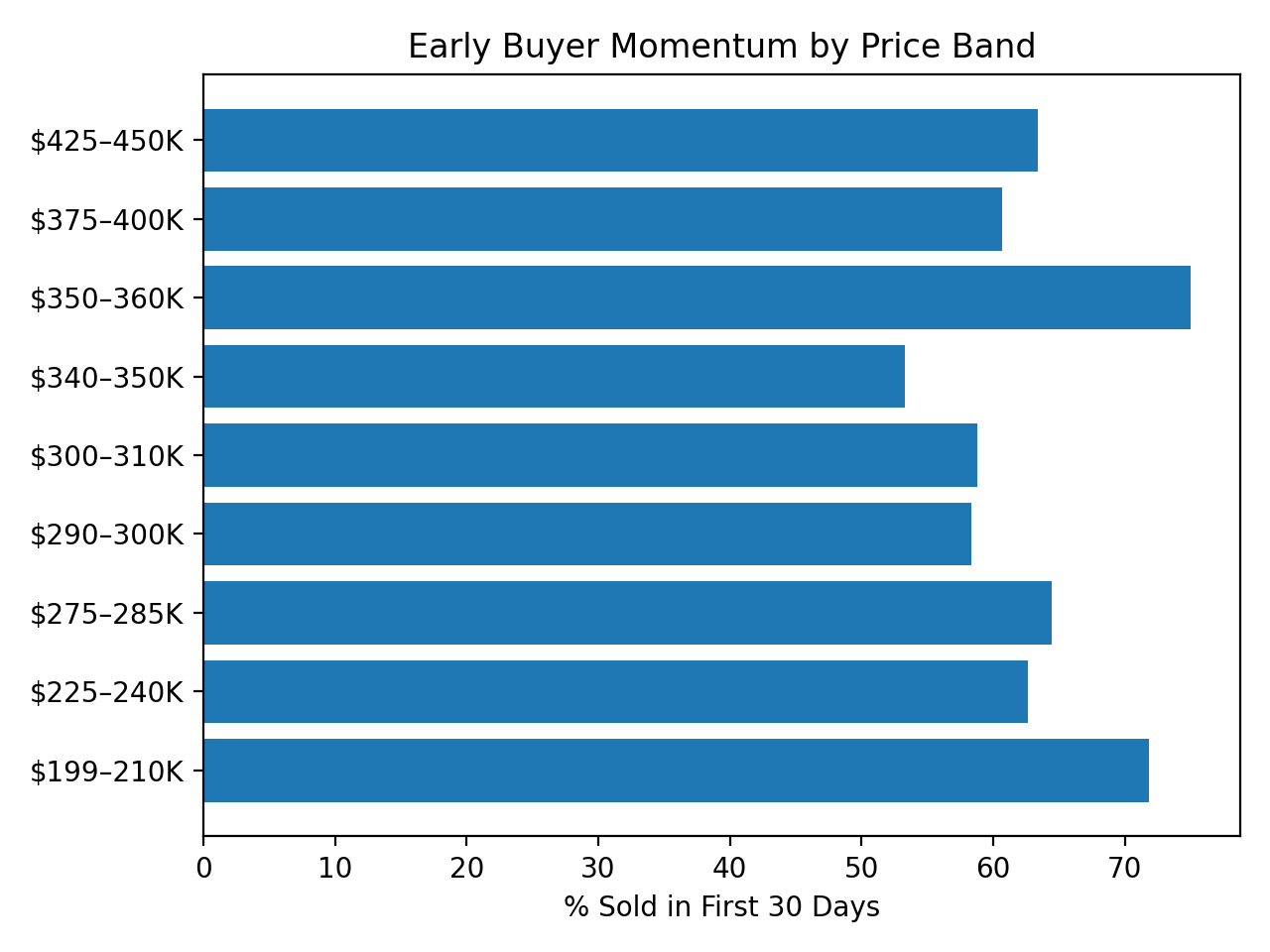
3. Percent Sold in the First 30 Days
A direct measure of early demand, pricing accuracy, and leverage.
Together, these metrics tell the full story: money, time, and momentum.
Pricing Thresholds Are Real — And They Shape Buyer Behavior
Buyers don’t shop homes dollar by dollar. They shop in price brackets.
In Lackawanna County, several thresholds repeatedly shape outcomes:
-
$300,000
-
$350,000
-
$400,000
What we found is consistent across the data:
Homes priced just under major thresholds often perform worse than homes priced decisively above them.
Not because the homes are worse — but because buyer psychology changes.
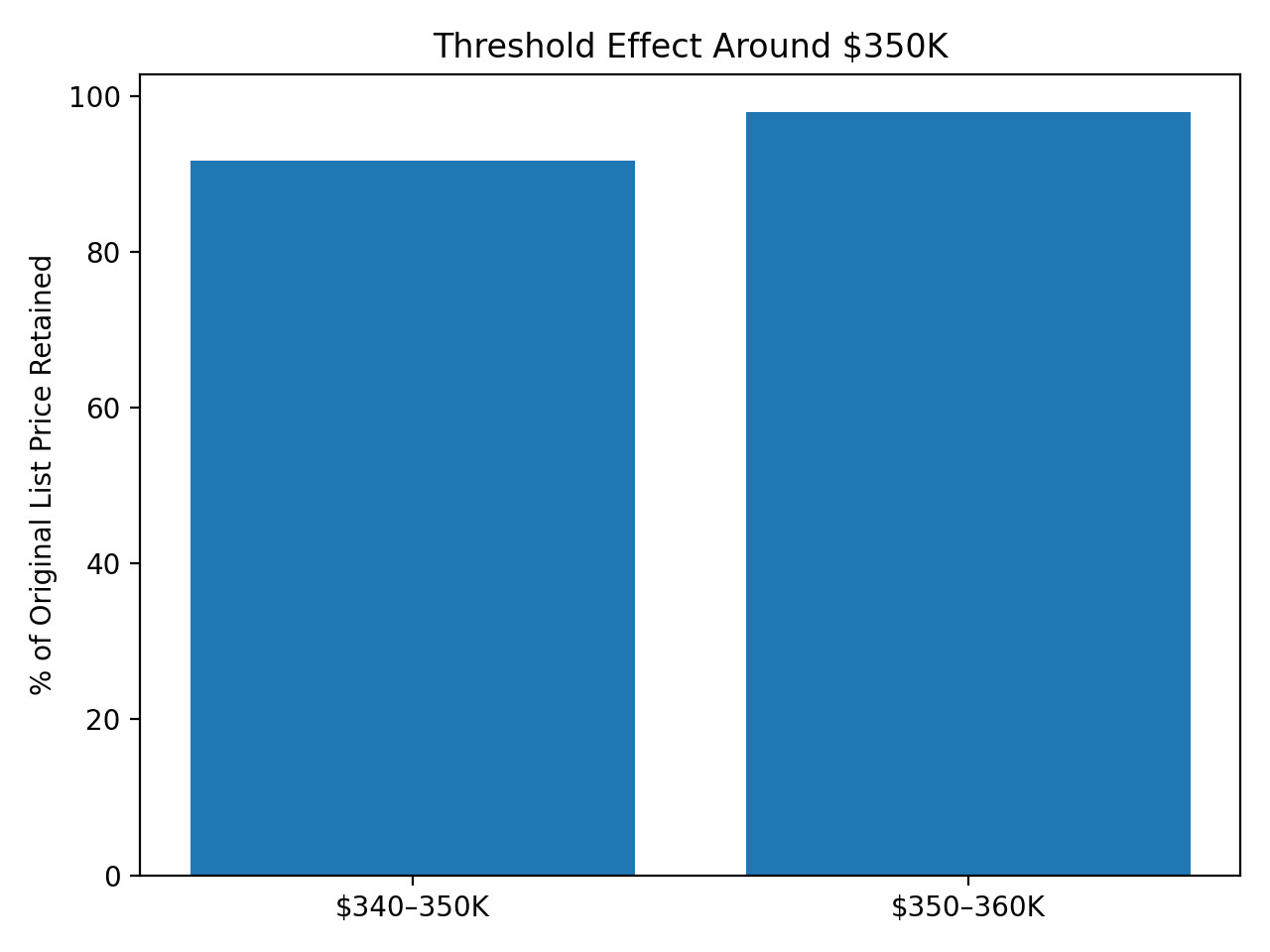
Why the $340K–$350K Range Consistently Underperforms
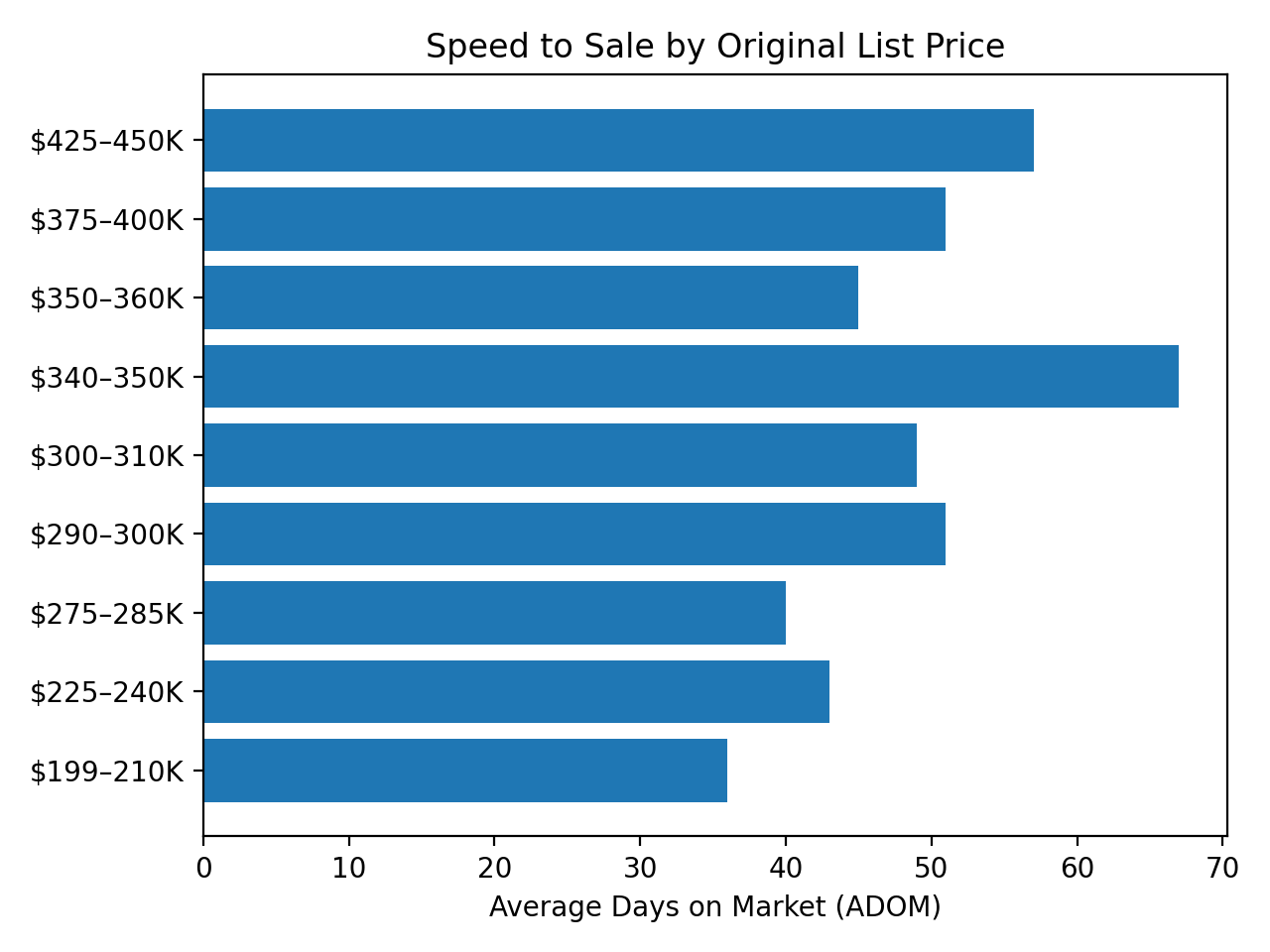
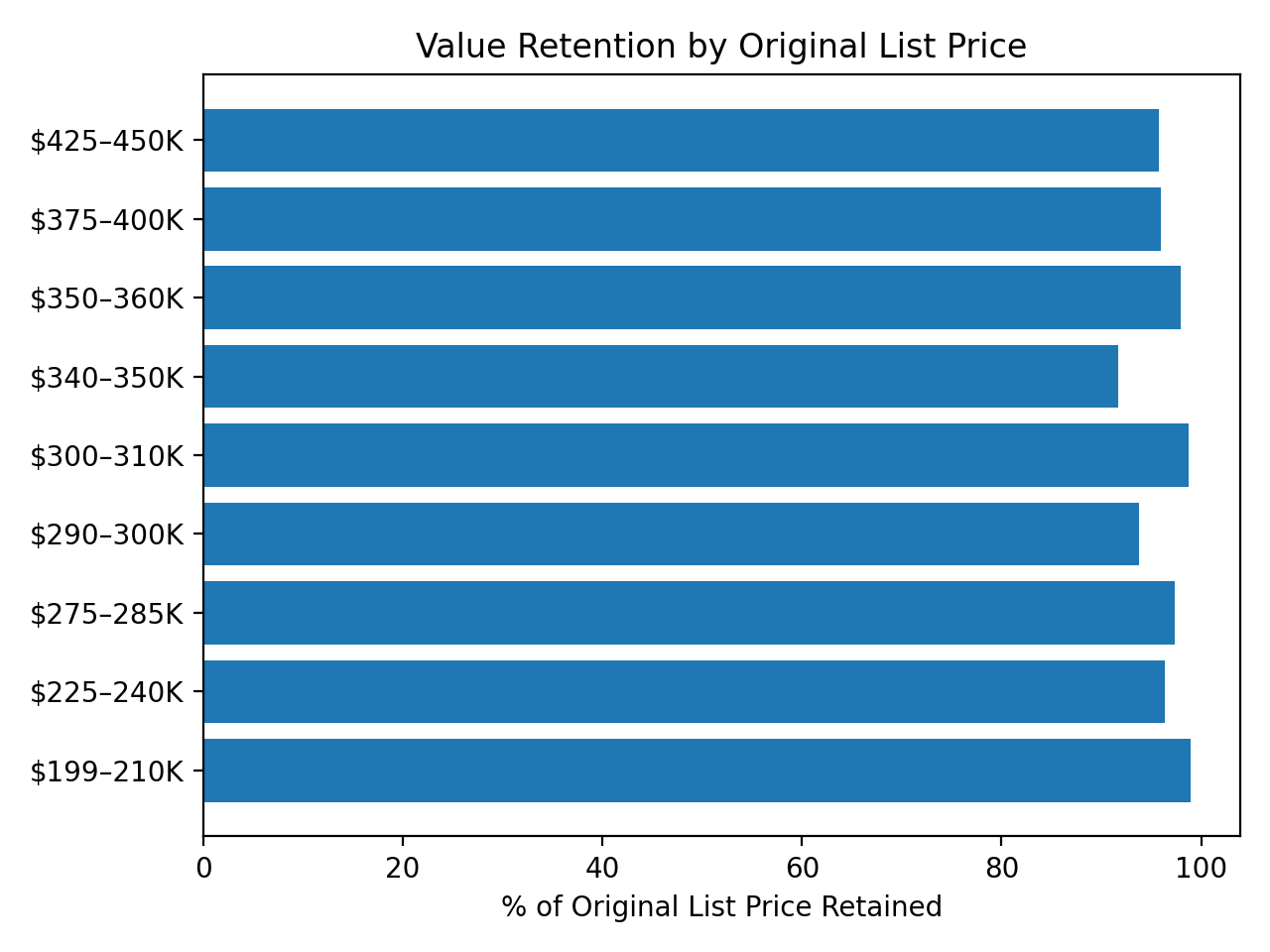
One of the weakest performing pricing bands in the county is $340,000–$350,000 (based on original list price averages).
Homes in this range show:
-
Lower value retention
-
Longer days on market
-
Weaker first-30-day momentum
Why does this happen?
1. It feels expensive — but not premium
Buyers at this level feel stretched, but don’t feel rewarded. They compare aggressively.
2. Financing pressure becomes real
Monthly payment sensitivity increases. Decisions slow. Offers soften.
3. Buyers look up, not down
Most buyers shopping $345K are also seeing $355K–$360K homes — often newer, larger, or better positioned. This creates hesitation — and hesitation costs leverage.
The Contrast: Why $350K–$360K Performs So Much Better
Just above that risk zone sits one of the strongest pricing lanes in the market: $350,000–$360,000.
Homes here, on average:
-
Retain a significantly higher percentage of list price
-
Sell faster
-
See stronger early buyer activity
This matters because it proves something critical:
The market isn’t weak — it simply rewards clarity over hesitation.
Pricing decisively resets buyer expectations and attracts confidence.
The Same Pattern Appears at $300K
The same behavior shows up at the $300K threshold.
Homes priced $290K–$300K tend to:
-
Sit longer
-
Give up more value
-
Miss early momentum
Meanwhile, homes priced $300K–$310K retain more value — even though the difference feels small.
Again, this is not coincidence. It’s buyer perception at work.
Exposure vs. Competition vs. Net Proceeds
Here’s where pricing gets nuanced — and where experience matters.
Sometimes, pricing for exposure and competition is the right move:
-
When condition limits upward positioning
-
When speed and certainty are priorities
-
When buyer volume is the advantage
Other times, pricing for value retention is smarter:
-
When upgrades justify jumping a threshold
-
When competition improves just above a band
-
When sellers are willing to prepare strategically
The mistake is treating every home — and every seller — the same.
The Cost of Hopeful Pricing (In Real Terms)
Across the data, one thing is consistent:
Homes that miss early momentum almost always give up value later.
That lost value often exceeds:
-
the cost of strategic updates
-
the difference between pricing lanes
-
the benefit of “starting high”
Hopeful pricing doesn’t protect sellers — it delays reality.
From the Heart: How We Actually Price Homes at Revolve
At Revolve, we don’t believe in one-size-fits-all pricing. Every house is different. Every seller is different. And every outcome requires intention.
Sometimes, the strategy is:
-
price for exposure
-
create urgency
-
let competition do the work
Other times, the strategy is:
-
identify the next income tier
-
show exactly where updates matter
-
provide a step-by-step roadmap to justify a higher price
-
and move confidently into the next bracket
And sometimes, speed and energy are the priority — and we price accordingly.
What we don’t do is guess. We don’t price on hope. We don’t price on emotion. And we don’t let hot-spot pricing destroy clean deals.
Our goal is always the same:
Help you capture the highest possible net outcome — aligned with your timeline, your home, and your life.
That’s why our pricing conversations don’t end with a number.
They begin with a strategy.
And we’re here for all of it.
or another way