Categories
Buyer ContentPublished November 2, 2026
Buying a Home Near Seamans Airport: What to Know Before Choosing a Fly-In Community

Buying a Home Near Seamans Airport: What to Know Before Choosing a Fly-In Community

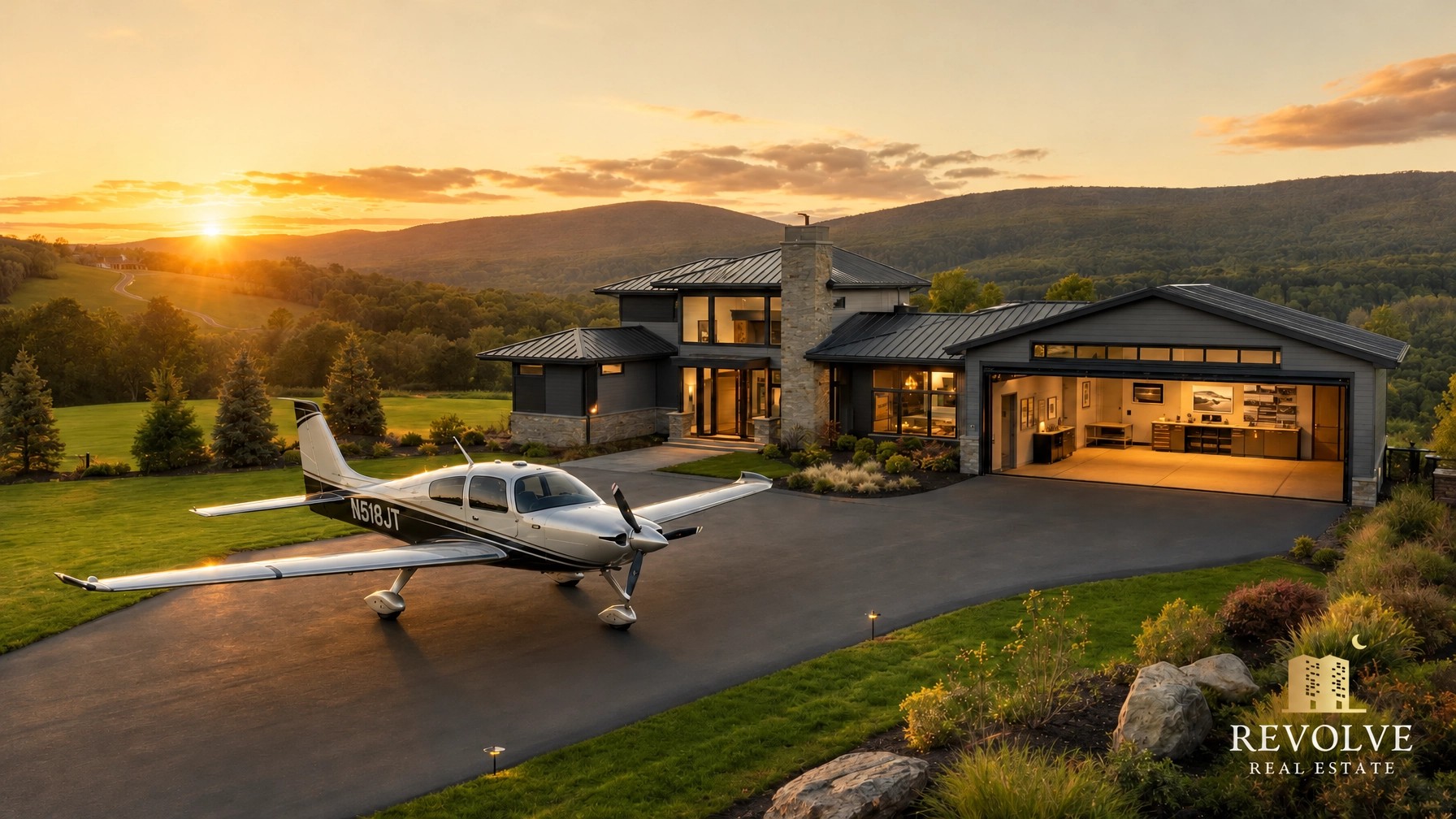
What if home could mean more than a place to park your car? In a residential airpark, your neighborhood may also connect to an airport, and, for some owners, make it possible to taxi an aircraft from a private hangar toward the runway.
That’s a distinctive lifestyle, but it’s also one you’ll want to understand before you buy. Skyline Estates near Seamans Airport in Factoryville offers custom-built home packages, generous homesites, mountain views and an aviation setting that can appeal to pilots and non-pilots alike. The right fit depends on your expectations, the specific homesite, and the rights and responsibilities attached to it.
What is a residential airpark?
A residential airpark is a community located at or near an airport, often with homesites designed around aviation access. Some properties may include a hangar or be positioned beside a taxiway. Others may be part of the same community without having direct access to the runway.
That distinction matters. “Near the airport,” “runway access,” and “direct taxiway access” aren’t interchangeable promises. The rights for a particular lot depend on its recorded documents and current airport rules.
And you don’t have to be a pilot to consider an airpark. Some buyers are drawn to the open setting, custom-home possibilities, mountain views and aviation character. Others want to be close to family members or neighbors who fly. The community can appeal to people who love the lifestyle, even if they never plan to own an aircraft.

How do hangar homes and taxiway access work?
A hangar home usually combines a residence with a hangar, either attached to the house or built as a separate structure on the property. A taxiway provides a route between an eligible hangar or aircraft parking area and the airport’s runway.
In practice, the layout and rights can vary by parcel. One homesite may have a hangar location or taxiway connection; another may not. There may also be rules about hangar design, construction, aircraft use or who can use a particular route.
Before you make assumptions based on a listing or a community description, ask for the documents that define the specific property’s rights. Review the deed, easements and any association or airport-use agreements. Skyline Estates publishes deed restrictions and amendments; obtain the complete documents that apply to the lot you’re considering and have a Pennsylvania real-estate attorney review them.
Aviation access is a property detail to verify, not a feature to assume.
Start with the airport and community rules
A home in a fly-in community comes with more than the usual questions about square footage, utilities and financing. You’ll also want a clear picture of how airport and neighborhood responsibilities work.
Ask who owns and operates the airport, who controls access, and whether your lot has any airport-related rights. Then confirm whether a homeowners’ association or property owners’ association exists, what it covers, and whether dues or assessments apply. Find out whether the airport and the residential community have separate rules or fees.
For Skyline Estates, review the recorded deed restrictions and amendments carefully. Look for rules that address building plans, hangars, aircraft activity, guest access, rentals, landscaping, fences, lighting, or future changes to the property. Don’t rely on a short summary if the full documents are available.

What should you know about Seamans Field?
Seamans Field is a general-aviation airport in Factoryville. The Pennsylvania Department of Transportation’s airport information lists runway 04/22 as an asphalt runway measuring 2,500 feet long by 50 feet wide, with lights. It also lists 100LL fuel.
Those specifications are useful context, not a judgment about whether the airport works for a particular aircraft or pilot. If you fly, assess the runway, operating environment, approach information and any restrictions for your own aircraft and experience. Confirm current conditions and procedures with the airport before making a decision.
The Seamans Airport website says there are no landing fees and that 100LL is available on-site by credit card at the pump. Fuel availability, pricing and access arrangements can change, so confirm current details directly with the airport. Don’t assume that a fuel service, or access to airport facilities, is included with the purchase of a homesite.
Runway maintenance, noise and insurance deserve early attention
Who maintains the runway, taxiways, lighting and snow removal? Ask the airport operator and any relevant association, and get the answer in writing. Clarify how maintenance is funded, whether homeowners have obligations, and how repairs or service interruptions could affect access.
Noise deserves an in-person check, too. Depending on activity, you may hear aircraft starting, taxiing, taking off, landing or practicing in the area. Visit the neighborhood at different times, including on a weekend and during favorable flying weather, and talk with residents about what they experience. Think about what you’d hear outdoors, with windows open, or while working from home.
Insurance is another question to raise before you’re committed. Tell your insurer that the property is in an airpark and ask for written confirmation of coverage for the home, any private hangar and liability exposures related to the setting. If you own an aircraft, ask an aviation-insurance professional about aircraft coverage and ground operations. Get the quotes and coverage details early, while you still have time to evaluate your options.
Who might enjoy Skyline Estates?
Skyline Estates may suit you if you’re a pilot looking for a home that supports your aviation routine, or if you simply want a custom home in a distinctive community with generous homesites and a mountain backdrop.
It may also appeal if you’re searching for luxury homes near me and want something beyond a conventional subdivision. You might love watching planes come and go, value the space and scenery, or want a home that reflects an aviation interest in your household. You don’t need to fly to appreciate the setting.
Still comparing different lifestyles across Northeast PA real estate? Think about how you actually spend your days. A fly-in community offers a very different experience from a traditional neighborhood or a search focused on lakefront properties. Neither is automatically better; the right choice is the one that fits your priorities, comfort level and long-term plans.

Make your checklist specific to the homesite
Before moving forward, organize your questions around the parcel, not just the community name.
- Access: Does this exact lot have runway access, taxiway access, both, or neither? Is the right recorded, transferable and subject to fees?
- Rules: What deed restrictions, airport rules, association rules or construction approvals apply?
- Operations: What aircraft and activities are permitted? What should you expect for noise and traffic?
- Costs: Who pays for runway and taxiway maintenance, snow removal, lighting and common areas?
- Practical details: Is fuel currently available? What services are offered, and on what terms?
- Protection: Have your homeowners’ insurer and, if applicable, aviation insurer reviewed the property and its use?
- Due diligence: Have you reviewed title, easements, surveys, permits and any relevant airport or township requirements?
If you’re planning a custom home, also confirm how the home and hangar can be sited, which approvals are needed, and how the building plan fits the lot’s restrictions. Skyline Estates is presented as a community with custom-built home packages; the details, availability and terms should be confirmed for the homesite you have in mind.
Explore the lifestyle with the right guidance
A fly-in home can bring together custom living, open space and aviation access in a way that’s hard to find elsewhere. The best way to decide if it’s right for you is to experience the setting, understand the airport, and verify the legal and practical details for the specific property.
Revolve Real Estate can help you explore Skyline Estates, ask the right questions and understand your options as you consider a home near Seamans Airport. Let’s look at the details together, and see whether this one-of-a-kind Northeast Pennsylvania lifestyle feels like home.

Kate Daye
Owner / Broker | Revolve Real Estate
or another way