Categories
Buyer Content, Investing, Seller ContentPublished November 9, 2026
Commercial Real Estate in Scranton PA: What 2026's Office and Retail Shifts Mean for Small Investors

Commercial Real Estate in Scranton PA: What 2026's Office and Retail Shifts Mean for Small Investors

Thinking about buying a storefront, small office building, or mixed-use property in Scranton? The commercial market is changing, but that doesn’t mean opportunity has disappeared. It means the details matter more.
In 2026, office tenants are looking for spaces that fit how people work now. Retail businesses are adapting to local customers and higher costs. And downtown’s historic buildings are attracting fresh interest for uses that combine housing, services, and street-level businesses.
For a small investor, the goal isn’t to predict every shift. It’s to understand the property, its likely tenants, and the numbers before you buy.
The office market is rewarding fit, not just square footage
Hybrid work has changed what many businesses need from an office. Some want smaller footprints, flexible layouts, strong connectivity, and convenient access. Others need a more specialized space for client visits, staff collaboration, or services that can’t be delivered remotely.
That evolution favors the right space, not automatically the biggest or newest one. A well-located suite that’s easy to use may be more appealing than a large floor that requires extensive renovation or is difficult to divide.
A useful regional reference point is Colliers’ Q4 2024 Northeast Pennsylvania office report. It described tenants’ preference for smaller, amenity-rich spaces and noted that office conversions were part of the regional picture. This report is a regional benchmark, not a live Scranton vacancy report; don’t treat it as a current snapshot of every building or submarket.
For your own deal, ask practical questions: Can the space be divided? Is there reliable parking or transit access? Are the layout, utilities, accessibility, and building systems appropriate for the type of tenant you’re targeting?
An office investment works when the space fits real tenant needs, not just a hopeful leasing plan.

Retail is adapting around everyday needs
Retail isn’t simply about whether people still shop in person. It’s about what they want to do nearby, what businesses can afford to operate, and whether a location makes it easy for customers to return.
A 2026 University of Scranton Brennan Barometer survey of 58 downtown businesses found that 69% reported improved conditions from March to April, compared with 39.7% in the prior year. The survey also found substantial concern about input costs. That combination matters: improving business sentiment can be encouraging, but it doesn’t eliminate the pressure of operating expenses.
For investors, the takeaway isn’t “retail is back” or “retail is over.” It’s to evaluate the likely tenant and customer base. Food and beverage, personal care, healthcare-related services, fitness, and other neighborhood services may draw repeat visits. But a business concept that works in one block may not work in another.
Walk the area at different times. Notice what’s open, where people park, how visible the storefront is, and whether nearby homes, offices, institutions, or attractions create a regular customer base. Ask whether a space can accommodate the tenant’s equipment, ventilation, plumbing, deliveries, and signage.
A storefront is more than a façade. It’s a business location that has to work day after day.
Mixed-use and adaptive reuse are part of downtown’s story
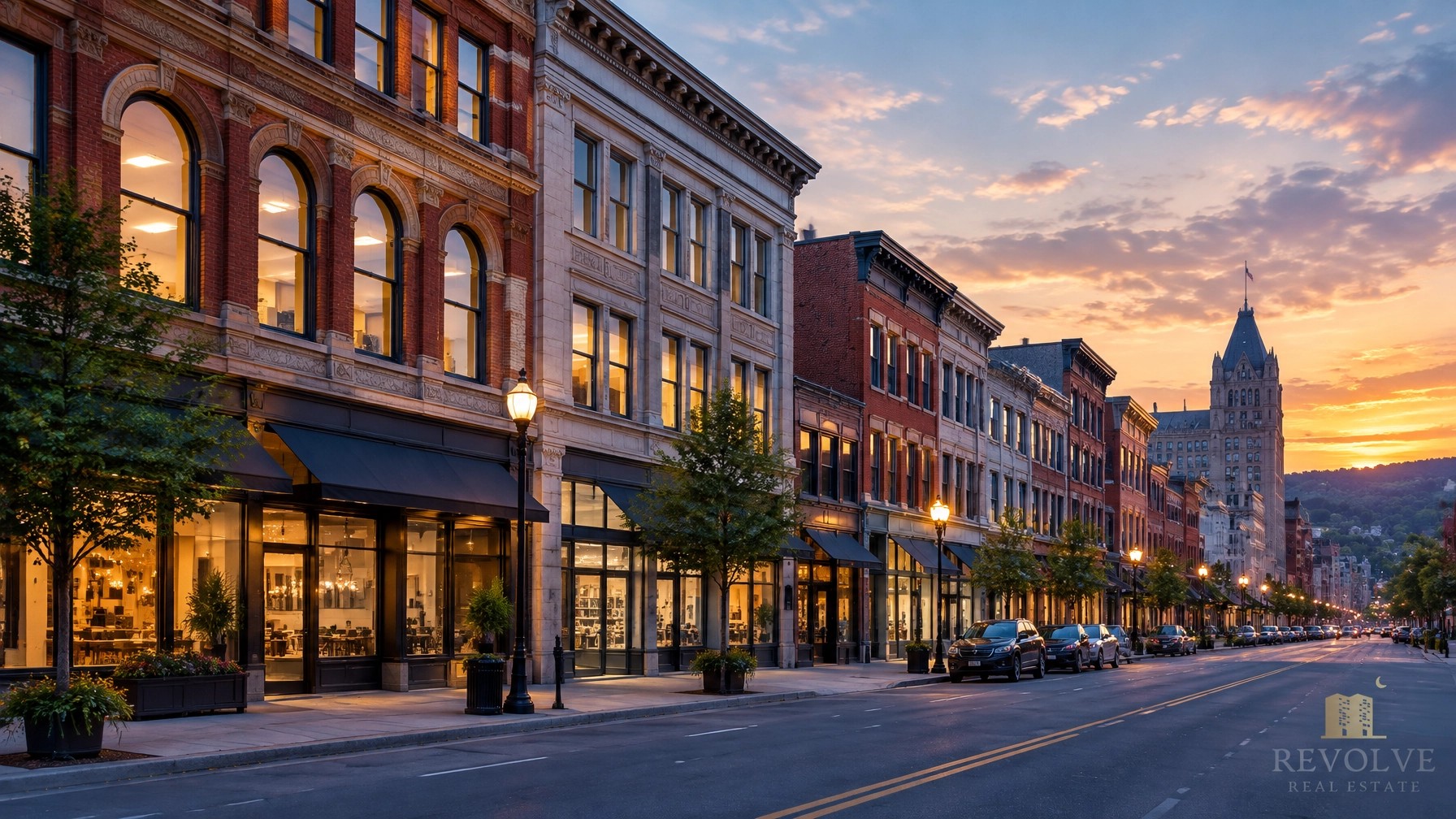
Scranton’s historic commercial buildings offer character and central locations. In some cases, they may also offer potential for adaptive reuse: changing a building’s layout or purpose to serve new needs, such as housing above ground-floor shops or services.
The model can be appealing because residents and businesses can support one another. People living nearby may create demand for coffee, dining, personal care, and everyday services. But the idea needs to work physically and financially. A building’s age and history don’t make renovation simple.
Before you assume upper floors can become apartments, or a large ground floor can become several smaller shops, check what the building can actually support. Layout, windows, utilities, fire safety, accessibility, and required approvals can all affect cost and timing.
Scranton’s small-business façade improvement program is one example of local support for eligible storefront improvements. Programs like this may help with a portion of eligible costs, but they shouldn’t be treated as a substitute for sound underwriting. Confirm current rules and eligibility directly with the city before relying on any assistance in your projections.

Commercial numbers need their own kind of analysis
Residential experience can help you spot location and property potential, but commercial underwriting is different. A home’s value is often discussed through comparable sales and neighborhood demand. For an income-producing commercial property, investors also examine the property’s income, expenses, leases, tenant credit, and future leasing risk.
One common measure is the capitalization rate, or cap rate: a property’s net operating income divided by its purchase price. It’s a useful way to compare income relative to price, but it isn’t a promise of return. It doesn’t automatically capture financing costs, major repairs, lease-up time, taxes, or future capital work.
So don’t compare a commercial cap rate with a residential rental yield as if the properties carry the same expenses and risks. Make sure the income and expense assumptions are clear, consistent, and supported by records.
Lease structure matters, too. In a gross lease, the landlord generally pays some or many property expenses, although the details vary. In a triple net (NNN) lease, the tenant typically pays base rent plus specified property costs, which may include taxes, insurance, and maintenance. Lease language determines what’s actually covered. A NNN lease doesn’t mean the owner can ignore building condition, tenant obligations, or oversight.
Review lease terms and verify the tenant’s payment history, renewal options, responsibility for repairs, security, and any periods without rent. One strong tenant can be an advantage; dependence on one tenant can also be a risk.
Financing and due diligence deserve extra time
Commercial financing is not simply a larger residential mortgage. Lenders may focus on the property’s income, the borrower’s experience and finances, the lease-up plan, and the asset’s condition. Loan structure, equity requirements, term, and guarantees vary by lender and deal.
Talk with commercial lenders early: before you make an offer based on assumptions about financing. Ask what documents they’ll need and how they’ll evaluate existing leases, projected income, renovation costs, and the property’s ability to support debt payments.
For a first commercial purchase, a careful review can help you avoid surprises. Depending on the property, investigate:
- Current leases, rent rolls, deposits, options, and tenant payment records
- Property taxes, insurance, utilities, and operating expenses
- Roof, structure, mechanical systems, and deferred maintenance
- Zoning, permitted uses, accessibility, and code requirements
- Environmental concerns and any needed specialist inspections
- Renovation costs, leasing costs, and the time needed to stabilize occupancy
Older buildings can be compelling, but historic character doesn’t make construction costs predictable. Build a realistic contingency into your plan and confirm approvals before committing to a proposed use.
The opportunity is real, but selectivity matters
Downtown revitalization can create momentum. More residents, active institutions, and new or renovated businesses may strengthen the local customer base. But a development announcement is not the same as completed construction, and more foot traffic in one part of town doesn’t guarantee a particular storefront will succeed.
Be especially careful with projections that depend on a single future event, such as a major project, a planned tenant, or a rapid increase in nearby activity. Ask what happens if that timeline changes. Can you carry the property? Is there a second use for the space? Can you lease it to a different kind of business?
A solid commercial investment should make sense based on what you can verify today, while still leaving room to benefit from what may improve tomorrow.
Local knowledge helps turn a listing into a plan
Commercial real estate in Scranton PA is shaped by block-by-block conditions: access, visibility, parking, building layout, nearby institutions, existing businesses, and the practical realities of local renovation and leasing. Those details can change how a property should be priced, financed, or repositioned.
Kate Daye was recognized by The Times as the #1 Commercial Agent in Lackawanna County for 2026. For small investors, that local perspective can help you ask sharper questions, evaluate a property’s potential, and understand what needs verification before you move forward.
At Revolve Real Estate, we bring commercial guidance together with local market knowledge and investor-focused support. You can explore our Scranton area page or connect with our team to discuss a commercial purchase, sale, or development opportunity.
You don’t need to know every answer before starting. You do need a clear plan, reliable information, and a team that will help you assess the possibilities: one decision at a time.

Kate Daye
Owner / Broker | Revolve Real Estate
or another way